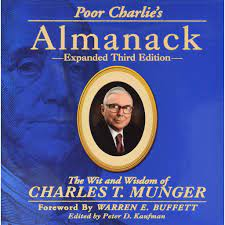
12 must-read books on decision-making and problem-solving. – Part – 5. POOR CHARLIE’S ALMANACK

Charlie Munger is one of the most influential and successful investors of all time. He is guided by a strong work ethic and a series of principles that projected him quite high on the social and financial scale of life. Here are my three favorite lessons from the book, Poor Charlie’s Almanack. Munger’s cross-disciplinary skills proved to be of utmost importance when it came to his career in finance. No matter how many challenges crossed his path, he managed to learn something from each and every one of them.

The key to Munger and Buffett’s successful business was morality, honesty, and respect. It’s important to develop a strong work ethic, do things the right way on the first try and engage only in moral businesses. Another important trait to develop is the ability to change your mind. Sometimes huge opportunities can pass us by if we don’t accept second opinions or new perspectives. If Charlie Munger could rethink his position in See’s Candy, you too can take a second look at your most important decisions in life.
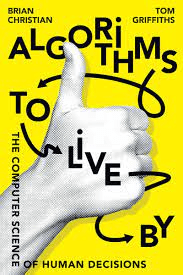
12 must-read books on decision-making and problem-solving. – Part – 4. ALGORITHMS TO LIVE BY

Algorithms To Live By by Brian Christian and Tom Griffiths explains how computer algorithms work and how you can use them to improve your productivity. An algorithm is really nothing more than a recipe: a series of steps you can follow to solve a very specific problem, that can be re-run as often as you like. Pick the one that takes the least amount of time and focus on that task until it’s done. Game theory is a field of economics that deals with how rational people make decisions, based on other peoples’ choices. A classic example of game theory is the prisoner’s dilemma, in which two prisoners are offered the deal to be set free if they tell on their partner in crime. People have a natural tendency to cooperate, even if they can’t agree on doing so beforehand.

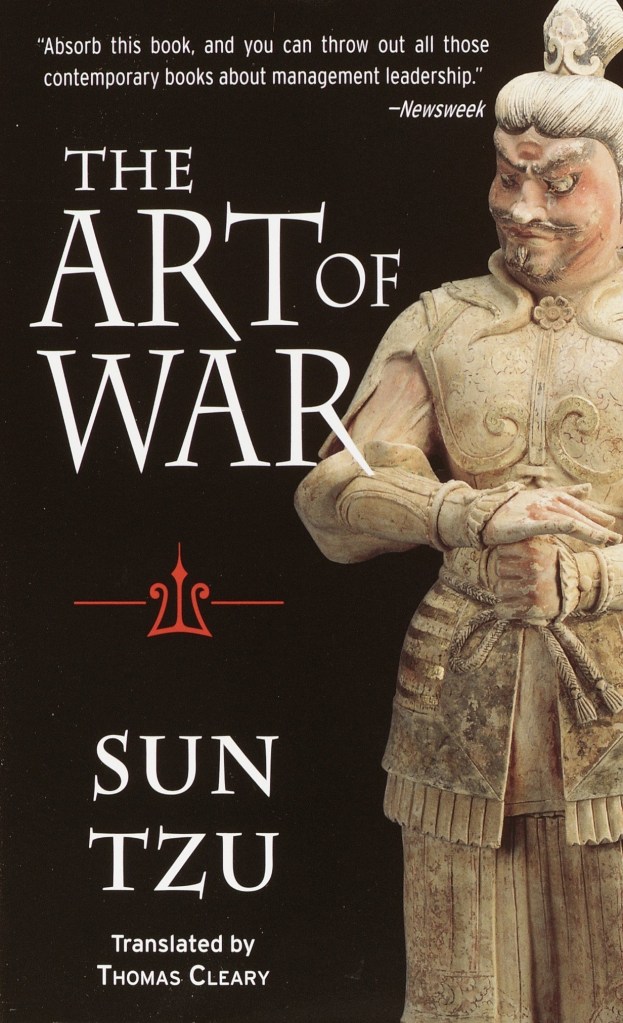
12 must-read books on decision-making and problem-solving. – Part – 3. THE ART OF WAR

Click the image

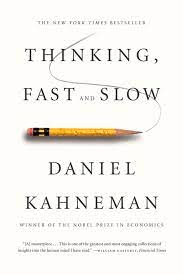
12 must-read books on decision-making and problem-solving. – Part – 2. THINKING FAST & SLOW

Daniel Kahneman’s Thinking Fast And Slow shows you how two systems in your brain are constantly fighting over control of your behavior and actions. It also shows you the many ways in which this leads to errors in memory, judgment, and decisions, and what you can do about it. When system 1 faces a tough problem it can’t solve, it’ll call system 2 into action to work out the details. System 1 thinks it can handle it, even though it actually can’t, and you end up making a mistake. The law of least effort states that your brain uses the minimum amount of energy for each task it can get away with.

So when it seems system 1 can handle things, it won’t activate system 2. This leads you to not use all of your IQ points, so our brain limits our intelligence by being lazy. The homo oeconomicus, the man (or woman) who only acts based on rational thinking, first introduced by John Stuart Mill, doesn’t quite resemble us. Milton Friedman’s research on economics built the foundation of today’s work in the field. Just knowing your emotions try to confuse you when it’s time to talk about money will help you make better decisions. Don’t let emotions get in the way where they have no business.

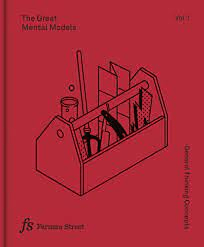
12 must-read books on decision-making and problem-solving. – Part – 1. THE GREAT MENTAL MODELS

Adopting the right Mental Models will increase your chances of success in life and work. Sharing this book with your team members would be a great way to build an understanding of each other’s mental models. A good book to reinforce your existing thinking patterns but also a way to learn new mental models to improve your thinking. Mental models describe the way the world works. They are how you infer causality, match patterns, and draw analogies.

A mental model is simply a representation of how you think something works. Charlie Munger recommends that 80–90 mental models will carry you through 90% of life. A map is a model of reality. It is not reality itself. Maps are always a snapshot in time.

Therefore they can represent something that no longer exists. When maps are created it includes the creator’s biases, assumptions, and beliefs. This is important to keep in mind as you think through problems and make better decisions.

If you know the first principles of something, you can build the rest of your knowledge around them. First-principles thinking is one of the best ways to reverse-engineer complicated situations. Reasoning from first principles allows you to step outside of history and conventional wisdom. The man who tries methods, ignoring principles, is sure to have trouble. When making choices, considering consequences can help you avoid future problems.

There are two approaches to applying inversion in your life. Start by assuming that what you’re trying to prove is either true or false, then show what else would have to be true. Instead of aiming directly for your goal, think deeply about what you want to avoid. When you see something you don’t like happen and which seems wrong, you assume it’s intentional. But it’s more likely that it’s completely unintentional.

The explanation most likely to be right is the one that contains the least amount of intent. Instead of generally assuming that bad results are the fault of a bad actor, you should look for options instead of missing opportunities.

Design a site like this with WordPress.com
Get started