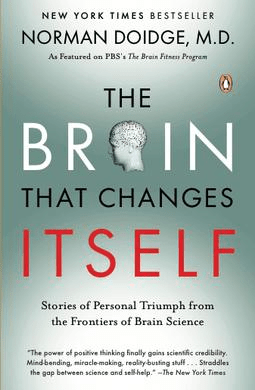
6 Great Books About How Your Brain Works – Part – 3. The Brain that Changes Itself

The Brain That Changes Itself is a book on neuroplasticity by psychiatrist and psychoanalyst Norman Doidge. The New York Times gave a mostly positive review of the book; The International Journal of Psychoanalysis published a negative book review essay. In our summary, we’ll briefly outline what’s brain plasticity and its key applications and implications. For more details, examples, and practical tips, do get our complete book summary bundle (in text, infographic, and audio formats). Brain plasticity is the idea that we see with our brains, not our eyes.

Neuroscientist Paul Bach-y-Rita started to question this in the early 1960s when brain scans showed a cats’ visual area lighting up when its paw was stroked or when it heard sounds. He began to think of the brain as “polysensory”, i.e. each sensory area can process signals from multiple senses. This insight led to many sensory-substitution inventions, e.g. gloves that allow blind people to read computer screens. In The Brain that Changes Itself, we look at some of the key research findings for neuroplasticity over the past decades and their implications. We’ll share how he uncovered invaluable insights about plasticity (and what they mean).

How people with half a brain (or massively damaged brains) managed to live normal lives. How patients with spine or brain damage may actually have lost their mobility due to “learned nonuse”.

In his book, Doidge explores how neuroplasticity works and how it affects everything from learning to acquired tastes and treatments for diseases/disabilities. Here, we’ll look at why our malleable brain can become rigid, and how to change bad habits. Mental practice (if done systematically) can also be as powerful as physical training because the brain doesn’t differentiate between imagination and action. In this summary of The Brain that Changes Itself, we look at acquired tastes, sexual attraction, and neuroplasticity – how our experiences shape our brains. We examine Sigmund Freud’s theories on critical periods for sexual plasticity, Doidge’s observations of porn addiction and how to reverse it, and how love triggers plasticity and changes in our brains when we become parents.

Doidge’s book is packed with detailed stories and empirical research that take us through decades of scientific progress. How different scientists, doctors, and researchers made their discoveries, how they tested and applied the newly-acquired knowledge, and what potential solutions are still being researched. Doidge also dives into detailed explanations of various organs, sensory/motor systems, and diseases/disabilities, to help us understand how they relate to the latest findings in neuroscience.

10 Podcasts That Will Transform Your Life – Part 9 – TED TALKS DAILY

Click here 😃

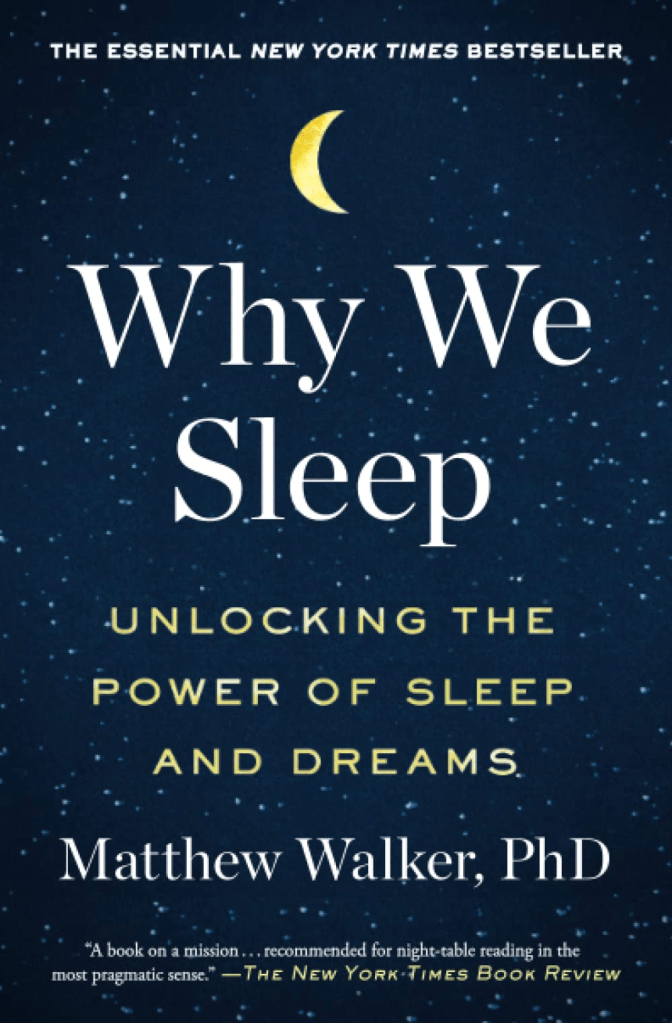
6 Great Books About How Your Brain Works – Part – 2. Why We Sleep

The book Why We Sleep was written by Matthew Walker, the director of the Center for Human Sleep Science at the University of California, Berkeley. In the book, Walker asserts that sleep deprivation is linked to numerous fatal diseases, including dementia. The book has received generally positive reviews from critics, who praise his research and views on the science of sleep while criticizing the book for its claims regarding sleep. Walker’s book is written from a neuroscientific view and mainly discusses the impact sleep has on the functions of the human brain. Walker believes that many people misinterpret the amount of sleep they actually receive, likely caused by deep thought during the light sleep phases.

Adults who sleep for less than 6 hours at the age of 40 and above have a higher chance of suffering a cardiac arrest or a stroke. Sleep is defined as 5 different sleep cycles with NREM and NREM, or non-rapid eye movement sleep, being the driving forces and framework of a person’s good night’s sleep. He also addresses the P.T.S.D victims’ nightmares, stating that their dreams’ ability to heal them by reducing the emotions connected to a distressing memory is affected by an unusual quantity of noradrenaline being created. The values of sleep and the consequences of sleep deprivation are also brought up in the book. Walker wrote that sleeping after studying allows for “memory, integration and retention benefits” to occur.

Many organizations are changing their workplaces by allowing more “flexible working” and comfort zones for people to rest. A five-step guideline is written on how to prevent “self-euthanasia” from missing sleep. The book ends with Walker’s advice for better sleep through 12 tips.

Critics have praised the book for its convincing studies on the importance of sleep and its impact on society. The book has been described as “tremendously terrifying” and “unforgettable” by one reviewer, while another has called it “beautifully written” and informative. The book’s failure to answer its own title ‘Why We Sleep’ has been criticized. Anu Valtonen found fault in the book naming neuroscience as “the science that provides the knowledge of sleep and dreams” and overlooking other disciplinary areas related to sleep. Rosa Breed criticized Walker’s lack of references when writing the book, noting that there was no proof in certain statements made by him.

The book has spawned controversy over whether or not the amount of sleep received worldwide has decreased. Some critics felt that some of the ideas brought up by Dr. Richard Walker in his book were thought to be disturbing. Bill Gates disagreed with Walker’s claim that sleep and Alzheimer’s disease have a strong connection to each other. Some of Walker’s claims were based on laboratory studies without supporting real-world evidence, making them questionable to critics.

10 Podcasts That Will Transform Your Life – Part 8 – THE RICH ROLL

Andrew D. Huberman is an American neuroscientist and associate professor in the Department of Neurobiology at the Stanford University School of Medicine. He has made contributions to the brain development, brain plasticity, and neural regeneration and repair fields. Much of his work is focused on the visual system, including the mechanisms controlling light-mediated activation of the circadian and autonomic arousal centers in the brain. Huberman studied the structure of binocular visual pathways that set the circadian clock in the hypothalamus. He discovered that non-invasive methods such as visual stimulation can enhance the regeneration of damaged retinal neurons, leading to partial recovery from blindness.

His lab pioneered using genetic tools to study the visual system function, development, and disease. The work is part of the National Eye Institute’s Audacious Goals Initiative to restore vision to the blind. In 2017, the Huberman Lab created a virtual reality platform for probing the neural mechanisms underlying pathological fear and anxiety. That work involved collecting 360-degree videos of various fear-inducing scenarios such as heights and claustrophobia as well as atypical fear-inducing situations such as swimming with great white sharks. The Huberman VR platform is aimed at making discoveries that will lead to developing new tools for humans to adjust their state in order to promote adaptive coping with stress.

Rich Roll, ultra-athlete, health advocate, and the bestselling author goes deep with the world’s smartest and most thought-provoking thought leaders to educate, inspire, and encourage you to unleash your greatest, most authentic self.

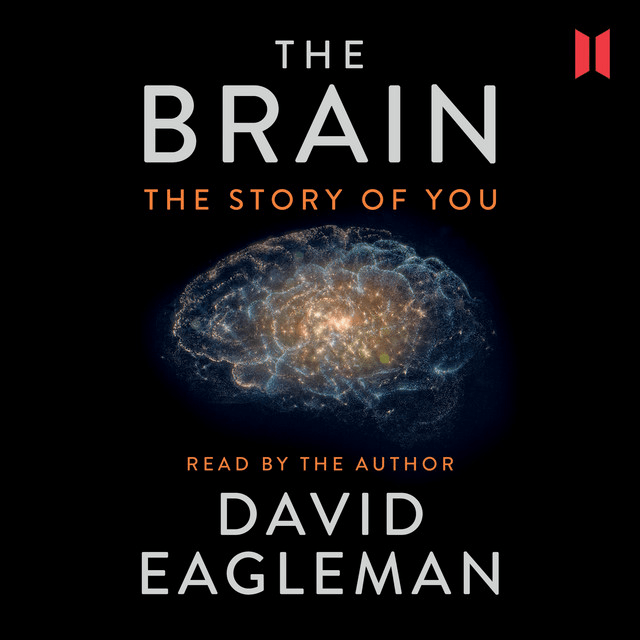
6 Great Books About How Your Brain Works – Part – 1. The Brain: The Story of You

The Brain with David Eagleman is a PBS documentary series developed and hosted by Dr. David Eagleman, a neuroscientist. Eagleman investigates the mysteries of the human brain in order to discover why we feel and think the way we do. The series premiered on PBS in 2015, and it has since been shown on the BBC in the United Kingdom and the SBS in Australia. It was nominated for an Emmy Award in early 2016.

The series and companion book received widespread recognition. It was named one of the finest television series of 2015 by the New York Times. According to Forbes magazine “In the good tradition of Carl Sagan, Eagleman illustrates that science is intriguing without inflated embellishment, and if you pay attention, you’ll find yourself absorbed in it,” Forbes magazine stated. The series was hailed in the scientific magazine Nature as “a perfect introduction to how biology creates the mind… organized around critical and broad topics, rich in personal and societal significance And Eagleman’s responses are always clear, interesting, and thought-provoking.” Hugh Laurie, the actor, named the series as one of his influences for his television series Chance. Hugh Laurie also tweeted about the concert, saying, “I recommend a face truss, to avoid your chin from striking the floor hard and frequently.” Eagleman has been dubbed “the Carl Sagan of neurology” by Texas Monthly Magazine.

Design a site like this with WordPress.com
Get started