The Inventor: Out for Blood in Silicon Valley is a 2019 American documentary film, directed and produced by Alex Gibney. The film chronicles the rise and fall of Theranos, interspersed with footage of Holmes and her COO Sunny Balwani making grandiose proclamations about Theranos. It is considered a companion piece to the book, Bad Blood: Secrets and Lies in a Silicon Valley Startup. She hired former Stanford professor of medicine Phyllis Gardner and a phlebotomy trainer to train employees at Walgreens’ Theranos Wellness Centers. The Wall Street Journal’s John Carreyrou and Roger Parloff wrote influential articles that accused Theranos of massive misrepresentation of what their company was offering. Stephanie Seitz discussed the problems with people interpreting and ordering their own labwork, as well as problems with Theranos’s inconsistent results in Arizona.
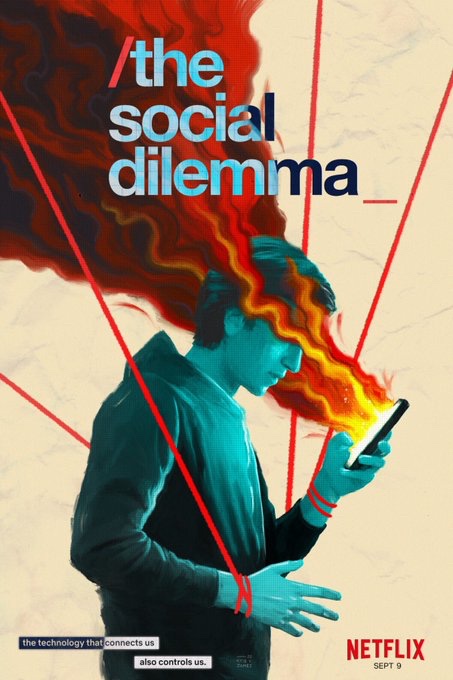
The documentary examines how social media’s design nurtures addiction to maximize profit and its ability to manipulate people’s views, emotions, and behavior. The film features interviews with many former employees, executives, and other professionals from top tech companies like Google and social media platforms such as Facebook and Twitter. Interviewees draw on their primary experiences at the companies they respectively worked in to discuss how such companies and platforms have caused negative social, political, and cultural consequences. Orlowski uses a cast of actors to dramatize the issues covered in the documentary. The main character, Ben, is a teenager who falls deeper into social media addiction under the manipulation of the Engagement, Growth, and Advertisement AIs.
Isla, the youngest daughter in the family, represents how teenage girls fall into depression and lose their sense of identity due to social media. Ben’s mother proposes that everyone keep their cell phones locked in a KitchenSafe prior to eating dinner but when a notification buzzes on someone’s phone, Isla gets up from the table and tries to open it. Halfway through the agreed time period, Ben becomes addicted to one video in particular. The AIs behind the screen analyze how his social media activity affects his daily life. Ben gets involved in an “Extreme Center” rally that escalates and becomes violent towards the end of the film.
The Social Dilemma examines the social and cultural impact of social media usage on regular users, with a focus on algorithmically enabled forms of behavior modification and psychological manipulation. The film depicts an array of related themes including but not limited political manipulation, technological addiction, echo chambers, fake news, depression and anxiety. One interviewee, Tim Kendall, former director of Facebook, spoke up on the alarming goal of Facebook: updating the app with increased addictiveness for a consistent boost in engagement.
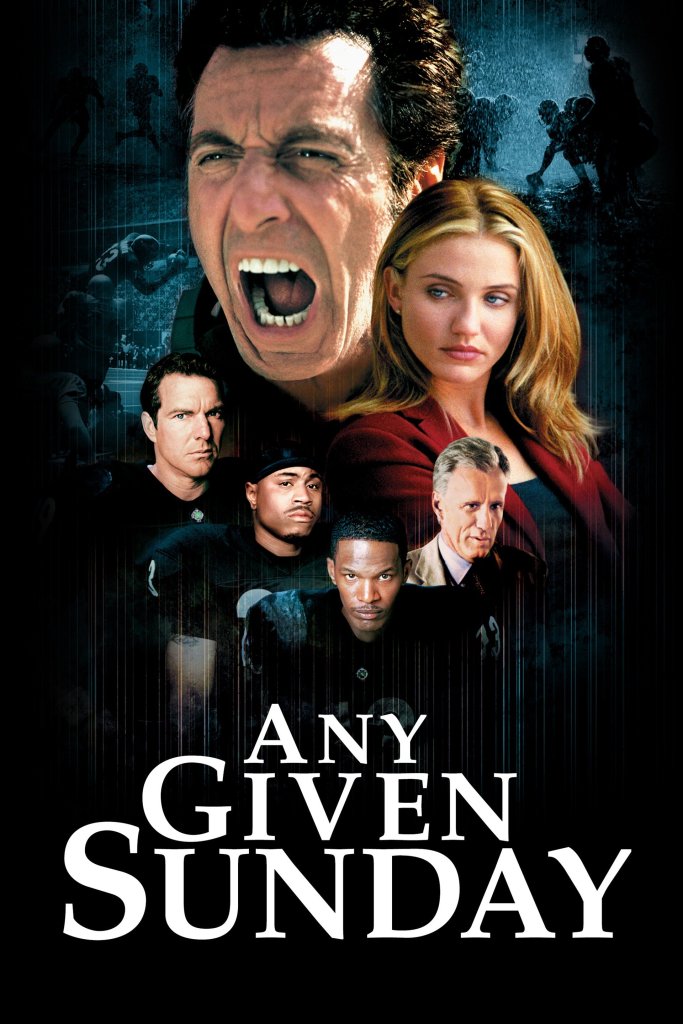
Al Pacino, Cameron Diaz, Dennis Quaid, Jamie Foxx, LL Cool J, Ann-Margret, Lauren Holly, Matthew Modine, John C. McGinley, Charlton Heston, Bill Bellamy, Lela Rochon, Aaron Eckhart, Elizabeth Berkley, and NFL players Jim Brown and Lawrence Taylor star. The film is partly based on the 1984 novel On Any Given Sunday by NFL defensive end Pat Toomay. Title is derived from a line in the book that a team can win or lose on “any given Sunday”, said by the fictitious coach Tony D’Amato. Beamen takes sole credit for the team’s success and changes plays in the huddle, leading to tension with teammates and coaches. Rooney returns as starting quarterback, but is injured with a concussion after scoring a touchdown and is taken out of the game.
After an argument, Beamen finishes the game and leads the team to victory. The film ends with Beamen apologizing to his teammates and making amends for his self-centered behavior.
Heal is a 2017 documentary film that was written and directed by Kelly Noonan-Gores. The film focuses on mind–body interventions and follows several individuals who used these techniques after being diagnosed with a fatal disease. It was reviewed by critics as an “informercial” that makes some valid points while pretending to be based on science yet promoting pseudoscience. The film focuses on Eva Lee, who is being treated for breast cancer by a Reiki master and Emotional Freedom Technique practitioner. David Hamilton describes his role as an organic chemist and the effects of a placebo.
Bruce Lipton, Joan Borysenko, Gregg Braden, and Darren Weissman discuss stem cells, genetics and the role of the environment on one’s health. Gregg Bradden asserts that prayer and thoughts of love work in combating illness by incorporating quantum entanglement and the Big Bang.
Enron: The Smartest Guys in the Room is a 2005 American documentary film based on the best-selling 2003 book of the same name by Fortune reporters Bethany McLean and Peter Elkind. The film examines the 2001 collapse of the Enron Corporation, which resulted in criminal trials for several of the company’s top executives. It contains a section about the involvement of Enron traders in the 2000-01 California electricity crisis. Lay hires Jeffrey Skilling, a visionary who joins Enron on the condition that they use mark-to-market accounting. Skilling imposes his version of a Darwinian worldview on Enron by establishing a review committee that grades employees and annually fires the bottom fifteen percent.
This creates a highly competitive and brutal working environment. With its success in the bull market, Enron seeks to beguile stock market analysts by meeting their projections. Enron’s CFO Andrew Fastow creates a network of shell companies designed solely to do business with Enron, for the ostensible dual purposes of sending Enron money and hiding its increasing debt. Fastow has a vested financial stake in these ventures and uses them to defraud Enron of tens of millions of dollars. Using mark-to-market accounting, Enron is able to record non-existent profits for these ventures.
Enron is one of the few internet-related companies to survive the dot-com bubble relatively unscathed. In 2000, Enron is named the “most admired” corporation by Fortune magazine for the sixth year running. Public perception of Enron begins to change due to its role in the 2000-01 California crisis. The film includes tape-recorded conversations between Enron traders who seem to derive enjoyment from their exploitation of the crisis and then cites the Milgram experiment as a means of explaining their behavior. It also explores the strong political connections Ken Lay and Enron had, particularly to the administrations of President George H. W. Bush and his son, President (and earlier Governor of Texas), George W.Bush.
Enron CEO Jeff Skilling is on the verge of a nervous breakdown as the company and its fraud start to unravel. Skilling’s odd behavior serves as a red flag to investors, who begin to question how financially healthy the company really is. The board fires CFO Fastow after discovering he had embezzled more than $30 million from the company through his shell companies. With Fastow gone, accountants issue a series of restatements that erase a majority of the company’s profits from 1997 through 2000.




 Random Citizen
You must be logged in to post a comment.