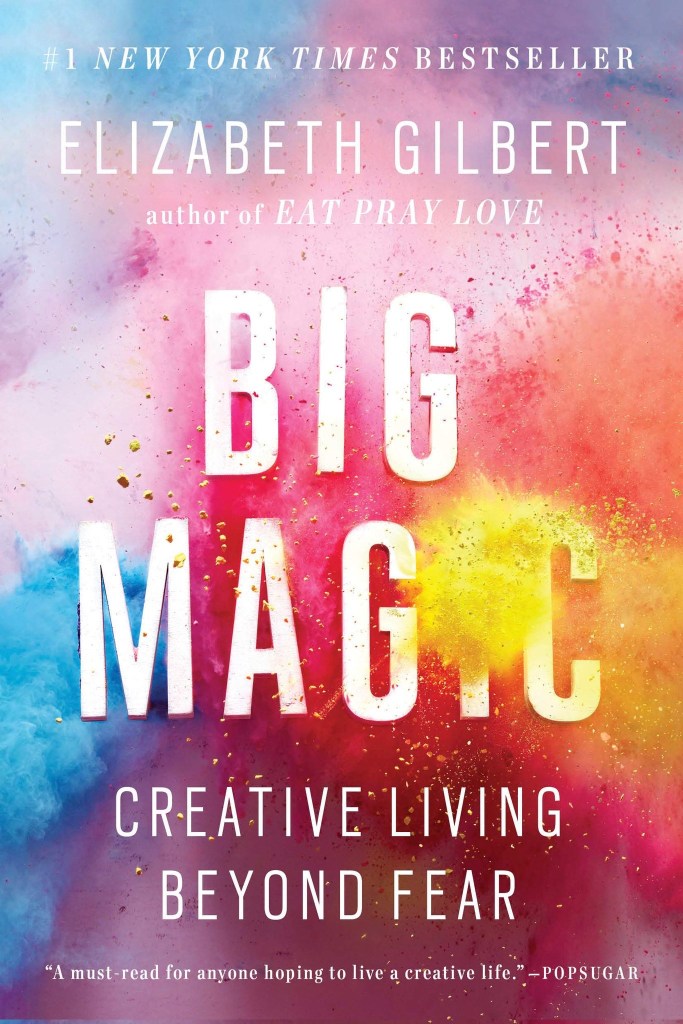
Elizabeth Gilbert is the author of the international bestseller Eat, Pray, Love. Big Magic is a non-fiction book, that describes her creative process. It’ll teach you how to be creative in spite of your fears and how to make sure your creativity keeps flowing freely. Announce to yourself that you’re here to chase your passion, regardless of rejections and reactions. Elizabeth Gilbert suggests an often critiqued, but incredibly stress-free approach: Keep your day job and let it fuel your creative affair.
Imagine having an affair with writing. Every day after work, you could lock yourself in your room and write away, free from worry about paying the bills or where to get the next client. How can you possibly create your best work like that? Gilbert’s ideas are mostly common-sense, but the way she formulates them makes them ring powerfully inside your ears for weeks and months to come.
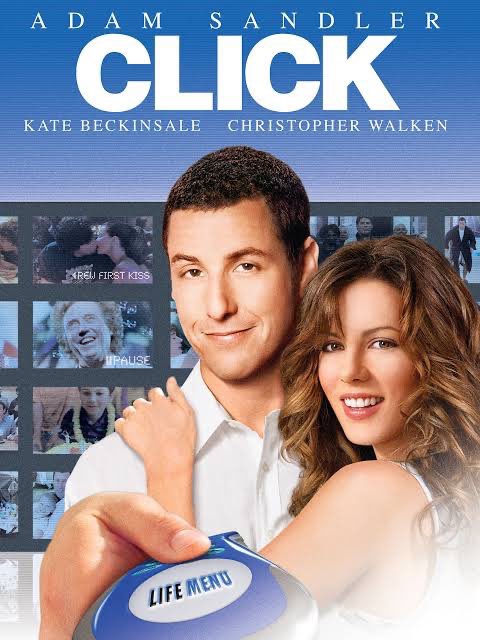
Click is a 2006 American comedy film directed by Frank Coraci and written by Steve Koren and Mark O’Keefe, with Adam Sandler producing. Sandler plays a workaholic architect who neglects his family after acquiring a mystical universal remote that allows him to manipulate reality. Kate Beckinsale plays his wife Donna, while Christopher Walken plays an eccentric visitor and supposed inventor. He uses the remote to fast-forward 10 years, knowing that Ammer intends to elevate him to a partnership. Despite his affluence, Michael has become morbidly fat, and Donna has divorced him.
Six years later, he awakens no longer fat, having had liposuction to save his life as part of his cancer treatment and subsequent heart attack. Ben is now an adult partner in the firm, but his father Ted died of old age. Michael attempts to use the remote to get to Ted’s deathbed, but it fails. Morty reappears as Michael is mourning his father. The remote transported him many years into the future to Ben’s wedding.
When Samantha contacts Bill, Michael suffers a second heart attack. He advises Ben to always prioritize family and assures his family that he still loves them.
Click was released in the United States on June 23, 2006, and had its UK debut on September 28, 2006, at the London Empire Cinema. The picture opened in 3,749 theaters and started at the top of the box office, earning $14.5 million on its first day and $40 million on its first weekend. Sony distributed the picture during a very successful year since it was their seventh number one blockbuster of 2006. Click debuted on June 30, 2006, and quickly rose to both nations’ top of the charts. It eventually grossed $137.4 million in the United States and $100.3 million overseas, for a total global gross of $240.7 million.
Click had generated a total of $10.87 million by the fourth week of its worldwide run and was airing in four countries. Critics have mainly given Click unfavorable reviews, with one saying it “stolen shamelessly” from It’s a Wonderful Life and Back to the Future. The film was panned for its crude comedy and unlikeable protagonist. Critics lauded Kate Beckinsale’s and Adam Sandler’s performances while dismissing the writing as bloated and Sandler as an everyman.
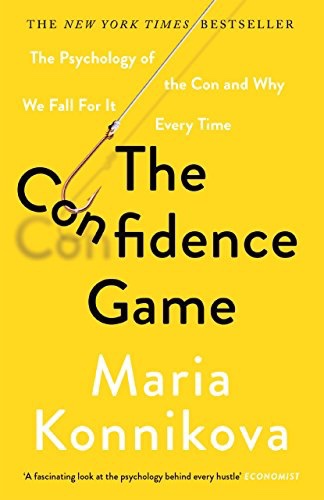
Everybody has a weak spot that can be exploited by con artists – yours just might be different from someone else’s. By learning about the personal and psychological weaknesses con artists manipulate, you can understand how they operate and how to keep yourself safe. How an optimistic mindset turned a professor into a criminal and how one little boy scammed the entire U.S. economy are just some of the ways that tricksters manipulate their victims. Getting too close to people can reveal uncomfortable truths, even when it comes to close relationships. Sometimes we unconsciously turn a blind eye to emotional cues that might give us a deeper understanding of someone else.
The more we learn about people, the more we’re able to tell if they might find us boring or if they’re being disingenuous towards us. A con artist has to gain their victim’s trust, as illustrated by the case of Debra and her psychic. However, there’s more to the process of manipulating someone than simply identifying their vulnerabilities. Joan fell in love with a man named Greg who seemed perfect in every way except for one: he didn’t have any friends or family. As more holes appeared in his story, Joan soon realized that her boyfriend had spent two years charming her into believing a lie.
People are drawn to those they perceive as being similar to themselves and they’re more likely to trust people with whom they have a lot in common. But con artists know that similarity can be mimicked for manipulative purposes by pretending to share someone else’s interests or values. This can be scarily effective because human beings are often so subconsciously egotistical that we automatically like or trust them a little more.
If you take time out of your day to get engaged in a conversation about a cause, you’ll feel compelled to do something about it. Stay-at-home moms were 30% more likely to spend two hours on the phone answering questions in a survey if they had previously agreed to take a moment and answer “just a few questions”. This is what’s known as the “foot in the door” strategy and it’s what con artists employ all the time. “Bill Morrison the Nigerian prince” was actually a 14-year-old American boy who had cooked up the scheme for fun. In 1900, people all across the United States sent him $4.00 at a time, in the economy of 1900, that really started to add up.
Once a con artist gets their foot in-door via a small request, they have the opportunity to go farther and cause more significant damage. Con artists are experts at pinpointing our self-perception blind spots. Chances are, we’ve all looked ridiculously without realizing it. In 2012, an otherwise very intelligent university professor fell for a picture of a beautiful model he saw on the internet. Although the two exchanged some instant messages online, they never spoke on the phone or saw each other on Skype.
The moral of this story might be internet safety, but more aptly, it might be to cultivate awareness of our blindspots. Because we might not know a lot about human psychology or how it can be applied to us — but con artists know a whole lot.
Con artists are able to tap into our inherent optimism and exploit it for personal gain. Our eagerness to believe in a con artist’s scheme stems from the fact that people are naturally inclined to be optimistic about the future. William Miller’s victims knew that only too well because he asked each of his friends to donate $10 to his business as start-up capital. Each of humanity’s most endearing qualities — compassion, generosity, hope — can be manipulated by those who seek to abuse them. And the same is true of our commitment to our personal beliefs.
When people have an experience that contradicts their beliefs, they’ll cling to those beliefs even if it means suppressing the experience. Con artists use this to reinforce our trust in them and ensnare us tighter in their web. A survey has revealed that 65% of all conversations revolve around gossip. Our reputation is one of the biggest concerns in our lives and we’re reluctant to damage it. More than almost any other topic, we’re concerned with how other people think about us more than how we behave.
We care so much about our perception in the eyes of others that psychologist Robin Dunbar’s 1997 study found that 65%. A good reputation is also a shortcut for gaining people’s trust even if they don’t know us personally, which is why it can be a valuable social commodity. It can also be a great tool for con artists as evidenced by a highly effective scam from 1915. Not one of the seventy thousand victims spoke out because they feared losing their reputation.
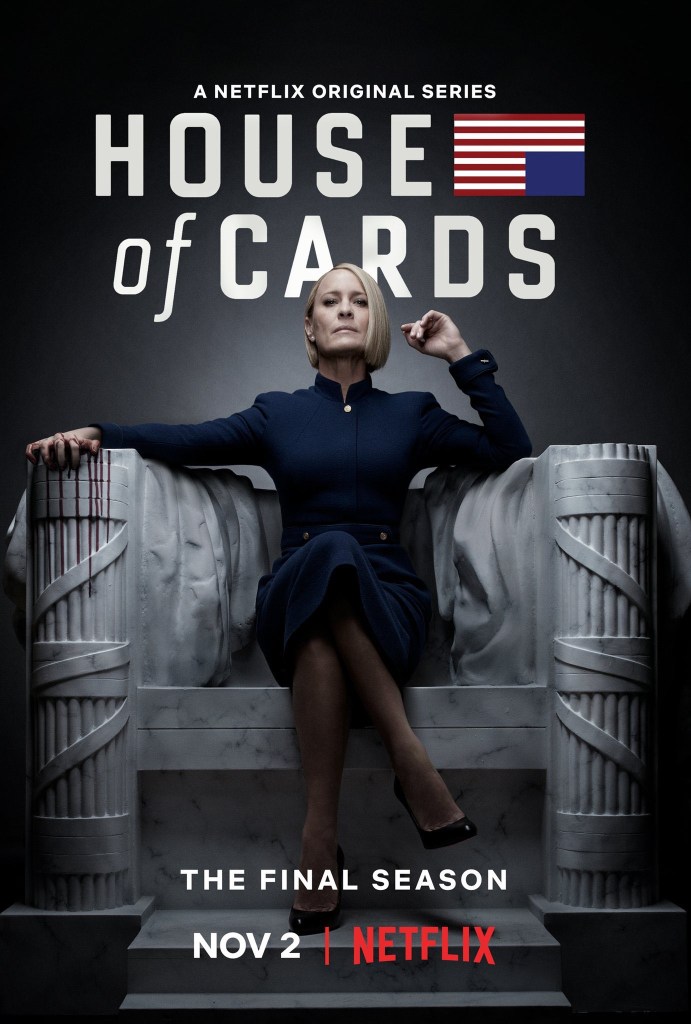
House of Cards is an American political thriller streaming television series created by Beau Willimon. The first 13-episode season was released on February 1, 2013, on the streaming service Netflix. It is the story of Frank Underwood (Kevin Spacey), an amoral politician and Democrat from South Carolina’s 5th congressional district, and his equally ambitious wife Claire Underwood. In season 3, Frank pushes for a controversial jobs program called America Works and faces a crisis in the Jordan Valley. Doug appears to switch sides and begins working for Heather Dunbar, while Doug brutalizes his former Chief of Staff into revealing that Rachel is alive and living under a false identity.
Donald Blythe is sworn in as Acting President and turns to Claire for guidance during a military crisis involving Russia. Frank Underwood and Claire Underwood are sworn in as President and Vice President of the United States after their respective parties’ candidates fail to win special elections. Claire faces increased scrutiny after her husband’s death following his resignation. The Shepherds continue to plot her downfall, enlisting the help of Brett Cole, an ambitious Congressman who seeks to become Speaker of the House.
House of Cards was one of the earliest shows to launch in the “streaming era”. MRC approached different networks about the series, including HBO, Showtime, and AMC. Netflix, hoping to launch its own original programming, outbid the other networks. Netflix ordered 26 episodes to air over two seasons, with Kevin Spacey attached to star and serving as an executive producer. House of Cards premiered on Zee Café on February 20, 2014.
The channel aired all 13 episodes of season 3 on March 28 and 29, 2015. Foxtel offered the entire first season to Showcase subscribers via their On Demand feature on set-top boxes connected to the internet. Critics have praised the first season for its “slick, engrossing drama that may redefine how television is produced”.

 Random Citizen
You must be logged in to post a comment.