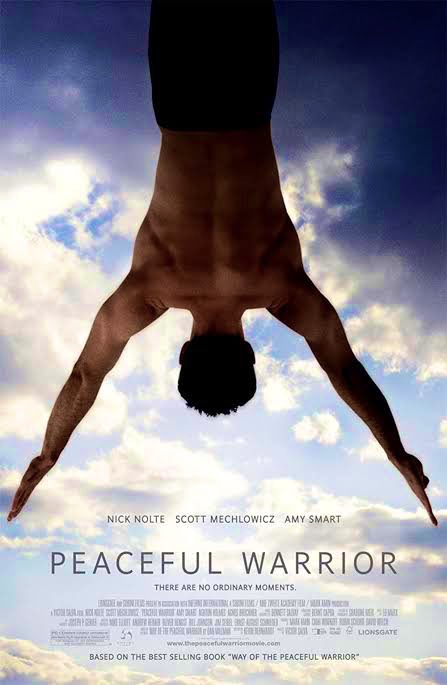
The film Peaceful Warrior, directed by Victor Salva and written by Kevin Bernhardt, is based on Dan Millman’s 1980 novel Way of the Peaceful Warrior. The film, set at the University of California, Berkeley, stars Scott Mechlowicz as a disturbed but skilled gymnast who encounters a spiritual mentor played by Nick Nolte. Dan’s coach feels he will be unable to compete at the National level. Dan heals from his wounds and returns to his training under the direction of Socrates.
He won the United States Trials for the Olympics. Dan then successfully performs, precisely like the Pommel Horse trials, with Socrates in his mind asking him three questions: “Where are you, Dan?” “Can you tell me the time?” “What are You?” and “Now.”
The film is based on Dan Millman’s best-selling memoir Peaceful Warrior, published during the hippy era. The film garnered mediocre to unfavorable reviews and presently has a 25% “rotten” rating on Rotten Tomatoes. Roger Ebert rated the film 212 out of 4 stars.
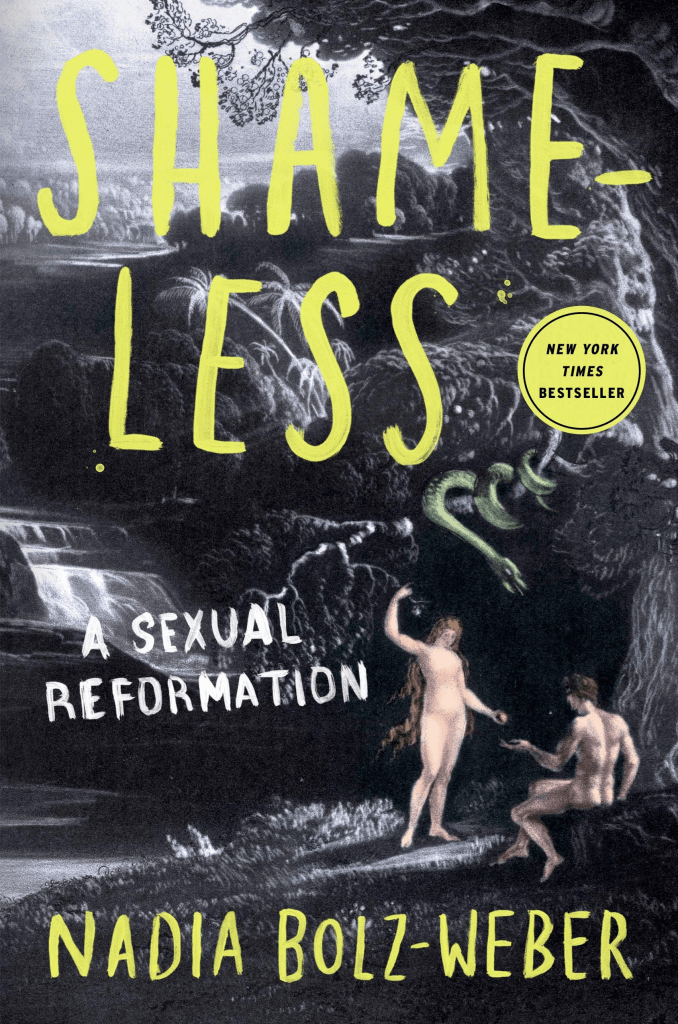
In Shameless, unconventional Lutheran pastor Nadia Bolz-Weber seeks to shine a light on the toxic messages that the church has conveyed. Through stories from her own life and those of her parishioners, she demonstrates the harm that such messages have caused and proposes a new way forward. Along the way, she also offers healing for those who’ve been confused, angered, or wounded by the church’s teachings. In her new book, Rev. Bolz-Weber argues that we need to have more open conversations about sexuality and a sexual reformation of sorts within the church. While she does feel that the church’s teachings on sexuality need to be revamped, she does express that not all sex is necessarily good for us.
When we are with a sexual partner we should show care, concern, and respect and not just see them as a body to be used for our pleasure (aka holiness). Rev. Laura Bolz-Weber’s book is about helping those harmed by church teachings on sexuality to find healing. She shows the myriad ways in which people have been damaged by these teachings when they didn’t fit the perfect mold. For some, it’s having sex outside of marriage and feeling like they’ve failed and are used goods. For others, it may be that they’re LGBTQ+.
For still others, they may have waited for marriage only to find that what they were taught about amazing sex life after is nothing but a myth. Shameless by Nadia Bolz-Weber is a book about overcoming the shame that the church has associated with sexuality and helping those who’ve been harmed to find peace. There is so much empathy and compassion within the pages of Shameless that I actually got teary-eyed a couple of times, which I didn’t expect. This was a great book that I would highly recommend for anyone who’s struggling with their own sexuality in regards to church teachings or anyone looking for a new way to look at sexuality through the lens of faith.
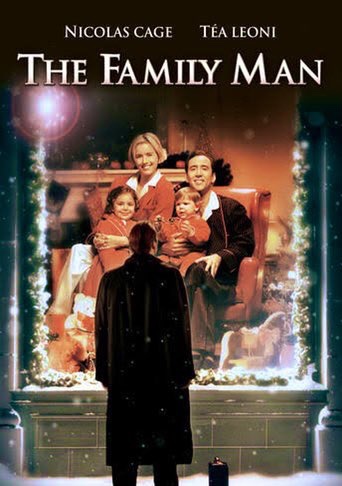
The Family Man is a romantic fantasy comedy-drama film released in the United States in 2000. Nicolas Cage and Téa Leoni appear in the picture, which also includes Jeremy Piven, Saul Rubinek, and Don Cheadle in supporting parts. Universal Pictures distributed it in theaters in the United States on December 22, 2000. It was nominated for Best Fantasy Film and Best Actress for Leoni at the 27th Saturn Awards. Jack gradually understands that he is enjoying the life he would have had if he had stayed in America with Kate as she had requested.
He comes from a humble household, where he works as a car tire salesman for Kate’s father and she works as a non-profit lawyer. He continues to succeed after a few failures, bonding with his children and falling in love with his wife again. Jack foregoes the acquisition agreement in order to find Kate, who is moving out of a luxury apartment before traveling to Paris. He begs to stay in this existence, but Cash informs him he has no choice: “a peek” is, by definition, ephemeral. Jack attempts but fails to stay awake and awakens on the “following day,” Christmas Day, to find himself back in his previous existence.
Curtis Hanson, who directed Wonder Boys instead of The Family Man, was offered the film. Brett Ratner was in the middle of directing Rush Hour when his agency began pitching him screenplays. Ratner chose to pursue the project after reading The Family Guy and persuaded the producers that he was the perfect man for the job. The Family Man was director Brett Ratner’s first collaboration with cinematographer Dante Spinotti, who later collaborated on Red Dragon, After the Sunset, X-Men: The Last Stand, Tower Heist, and Hercules. Initially, star Nicolas Cage, like director Brett Ratner, was not interested in doing a romantic comedy-drama because he had already done 8mm and Bringing out the Dead.
Téa Leoni’s ability to express the various intricacies of the character pleased both the producers and Cage. The Family Man debuted in third place at the North American box office, earning $15.1 million in its first weekend, after What Women Want and Cast Away. After 15 weeks, the picture grossed $75,793,305 in the United States and Canada and $48,951,778 overseas. Based on 28 reviews, Metacritic assigns a rating of 42 out of 100, indicating “mixed or mediocre reviews.”
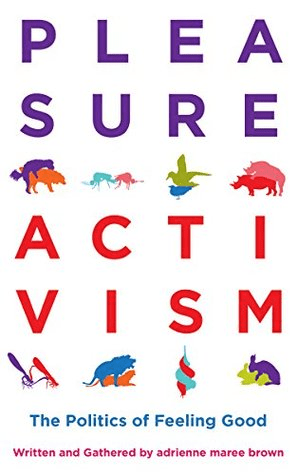
Adrienne Maree brown’s new book, “Pleasure Activism: The Politics of Feeling Good,” is released today (February 26). She draws from Black feminist luminaries to teach us how embracing what brings us joy is central to organizing against oppression. Brown talks with Colorlines about why self-love, healing, and harm reduction are necessary for collective liberation. In “Reclaiming Our Erotic Aliveness,” author Roxane Gay explores how pleasure can help us heal from oppression and marginalization. She says we can’t really feel for the collective if we don’t feel for ourselves on an individual and collective level. Read Audre Lorde’s “Uses of the Eroticism” and connect the dots between personal and collective experience.
What does it look like on a collective level for people of color to feel like they have access to a life that is fulfilling and satisfying? A lot of it is realizing that it’s not your fault and what happened to you [is] not the purpose of your body on this earth. There’s also a lot of healing that has to happen at the level of the body. In your new book, you explore the idea of somatics, which means the body in its wholeness. It’s an act of studying what helps the body recover from harm and feel in an authentic way.
Much of what we get trained to do in the wake of trauma is to hide our feelings. A lot of it is really retraining and giving yourself permission to be the most intact version of yourself available. Jones: I want a space where there’s a ton of agency. Harm reduction is one of the ways we get there. She says drug counselors are now using ecstasy more intentionally to help clients have experiences of joy, pleasure, and release.
She suggests journaling, masturbating more, and learning what gives you pleasure just from your own touch. How can pleasure help us build what she describes as “communities of care”? Pleasure activism is leaning into the simple pleasures of existing, right here, right now. If you orient [the world] around a collective community of care, then there’s plenty of stuff [available] if we know how to share it. I think communities of care are the future of our species. And I just hope that we don’t have to go down the most apocalyptic world to get us there.
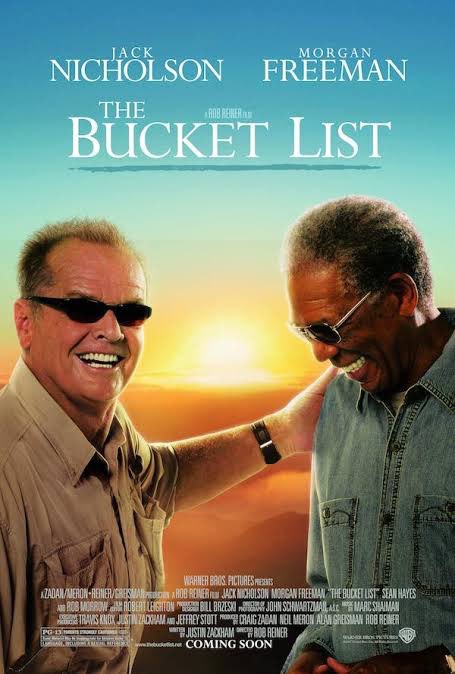
The Bucket List is a 2007 American buddy adventure comedy-drama film directed and written by Rob Reiner, starring Jack Nicholson and Morgan Freeman. The main narrative follows two terminally ill men on a road trip with a bucket list of things to complete before “kicking the bucket.” The film was named one of the best ten films of 2007 by the National Board of Review and was a box office triumph, debuting at number one in the United States and grossing $175.4 million worldwide. Throughout the voyage, Chambers attempts to reunite Cole with his estranged daughter, who has disowned him after he drove away her violent husband. Later, when in Hong Kong, Cole employs a prostitute to approach Chambers, who has never been with anybody other than his wife.
Chambers’ family gathering is cut short when, while preparing for marriage romance, he falls and is transported to the hospital with cancer. The Bucket List was published in the United States and Canada on January 11, 2008. It grossed $19,392,416 from roughly 3,200 screens in 2,911 theaters, averaging $6,662 per theater ($6,060 per screen). The picture concluded on June 5, 2008, with a final global total of $175,372,502. Roger Ebert, a film reviewer, criticized the film’s portrayal of cancer patients.

 Random Citizen
You must be logged in to post a comment.