
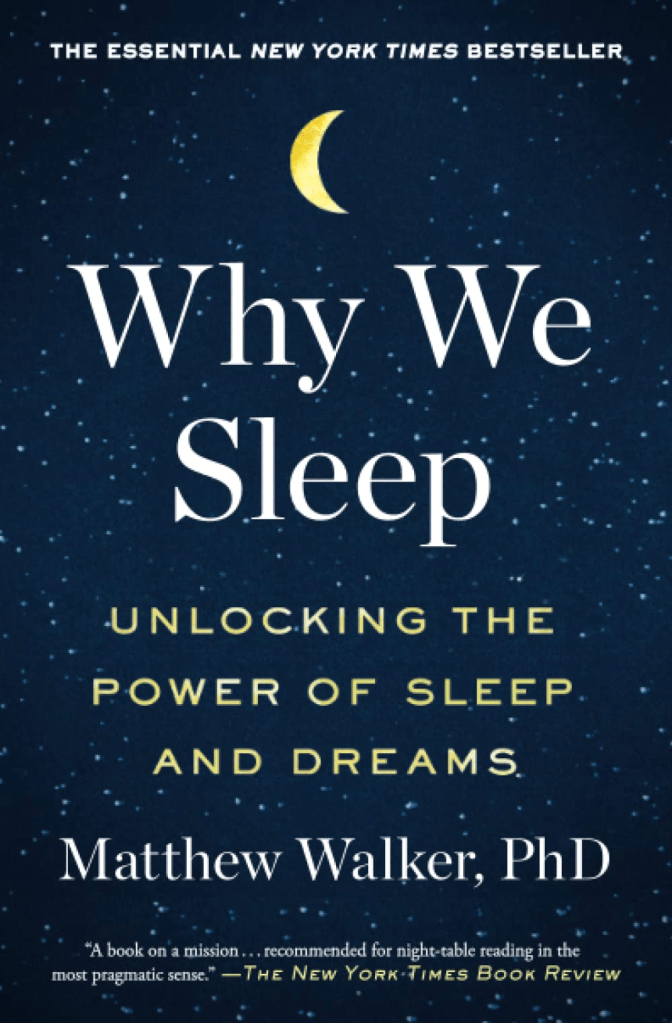
The book Why We Sleep was written by Matthew Walker, the director of the Center for Human Sleep Science at the University of California, Berkeley. In the book, Walker asserts that sleep deprivation is linked to numerous fatal diseases, including dementia. The book has received generally positive reviews from critics, who praise his research and views on the science of sleep while criticizing the book for its claims regarding sleep. Walker’s book is written from a neuroscientific view and mainly discusses the impact sleep has on the functions of the human brain. Walker believes that many people misinterpret the amount of sleep they actually receive, likely caused by deep thought during the light sleep phases.
Adults who sleep for less than 6 hours at the age of 40 and above have a higher chance of suffering a cardiac arrest or a stroke. Sleep is defined as 5 different sleep cycles with NREM and NREM, or non-rapid eye movement sleep, being the driving forces and framework of a person’s good night’s sleep. He also addresses the P.T.S.D victims’ nightmares, stating that their dreams’ ability to heal them by reducing the emotions connected to a distressing memory is affected by an unusual quantity of noradrenaline being created. The values of sleep and the consequences of sleep deprivation are also brought up in the book. Walker wrote that sleeping after studying allows for “memory, integration and retention benefits” to occur.
Many organizations are changing their workplaces by allowing more “flexible working” and comfort zones for people to rest. A five-step guideline is written on how to prevent “self-euthanasia” from missing sleep. The book ends with Walker’s advice for better sleep through 12 tips.
Critics have praised the book for its convincing studies on the importance of sleep and its impact on society. The book has been described as “tremendously terrifying” and “unforgettable” by one reviewer, while another has called it “beautifully written” and informative. The book’s failure to answer its own title ‘Why We Sleep’ has been criticized. Anu Valtonen found fault in the book naming neuroscience as “the science that provides the knowledge of sleep and dreams” and overlooking other disciplinary areas related to sleep. Rosa Breed criticized Walker’s lack of references when writing the book, noting that there was no proof in certain statements made by him.
The book has spawned controversy over whether or not the amount of sleep received worldwide has decreased. Some critics felt that some of the ideas brought up by Dr. Richard Walker in his book were thought to be disturbing. Bill Gates disagreed with Walker’s claim that sleep and Alzheimer’s disease have a strong connection to each other. Some of Walker’s claims were based on laboratory studies without supporting real-world evidence, making them questionable to critics.
 Random Citizen